May 9, 2013

La Bise à la Fac

In my old French life, I had the ever so mysterious bise (the traditional French greeting, a.k.a. cheek kissing) down pat.

With my boyfriends family? Yes! When meeting up with friends? Yes! When leaving friends? Yes!


Source: this great video about how to faire la bise, which I already translated.

I have discovered that school is a whole other ball game.

There are 7 of us in my masters program, and we see each other pretty much everyday. Even among our small, close-knit group, things can get a bit complicated.

Do we faire la bise every morning upon first seeing one another? No. But enough of the time to make it complicated? Yes.

For example, if we get to class early enough, we usually faire la bise, but if someone comes into class ten minutes late and is addressed after the class, a bise suddenly becomes optional. Sometimes for no apparent reason that I can tell the bise becomes optional.

Some of my classmates seem to be more pro-bise than others. While this doesn’t cause a problem per se as I now know who will and who wont demand a bise, I find it interesting that some of them are more adamant about it than others.


Source: the video.

Where it starts to get really complicated, however, is the casual crossing of paths. Sometimes, it is acceptable to simply wave. Other times, one is expected to stop and make time for a quick bise and a "ça va?”(how's it going?) before continuing on to one's destination.

To make matters worse, in my experience before la fac (university), a bise was always done upon first interaction, and never again afterwards. Here, even if I've already seen someone and said a casual "salut" (hello), a bise is still on the table for future greetings.

But again, the bise may or may not happen. It depends. On what? I couldn't tell you.

I'm winging it pretty much all the time.

April 21, 2013

Getting Around France: Trains vs. Cars

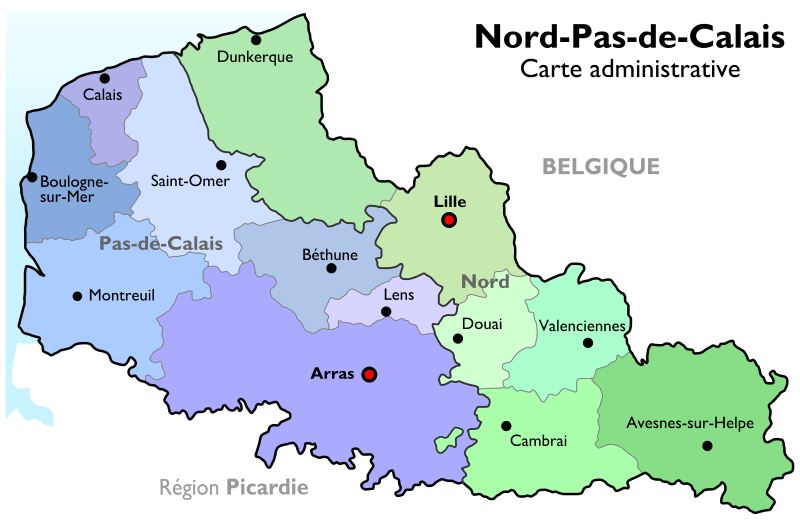
For spring break I decided to head up north to my old haunting grounds, Lille. I wanted to see my friends and eat delicious French fries.


Who wouldn't want to visit this?

The problem with going anywhere from Troyes is two-fold. The first problem is that Troyes is not on the TGV (trains de grandes vitesses, or high speed trains). The second problem is that, by train, one must always go to Paris first, and then to the subsequent destination.

In between Troyes and Paris there are roughly 180 km/111 miles. In between Paris and Lille there are 220 km/136 miles.

However, the train ride from Troyes to Paris is about 1 hour and 30 minutes, while the train from Paris to Lille is about 1 hour and 15 minutes.


Image ©Google Maps.

Despite traveling farther, it’s actually quicker to get to Lille thanks to the TGV.

Taking into account lay over time, getting my butt up North by train was looking like at least a 4 hour ordeal. It was also looking quite pricey.

Luckily, the train is not the only way to get around France. I did something I have never done before. I signed up for covoiturage.fr, a carpooling website.


Image ©Bla Bla Car.

I highly recommend it to my fellow travelers out to explore France. It was cheaper than the train, and got me to Lille faster (only 3.5 hours by car). My driver was on time, very friendly, and we had a very agreeable voyage (journey). We didn't even have to pass through Paris!


The point of zero kilometers (where the roads from Paris are measured from) sits in front of Notre Dame Cathedrale in Paris.

It would seem that all roads no longer go from Paris, but instead all trains do.

April 6, 2013

Dictionnaire Español-Français

For my masters, it is required to take a language class and this semester I decided to enroll in Spanish. Having had 4 years of Spanish in middle school/high school, I figured it’d be easier and serve me better than say Portuguese or Italian.

Learning a third language in one’s second language makes for some pretty interesting brain gymnastics. Nevertheless, I sometimes find that translating things into French makes more sense than the English equivalent (and vise versa).

While hoping there would be a Spanish-English dictionary at France's version of Good Will, Emmaus, there were only Spanish-French ones (but really, at a dollar a dictionary who can complain?). I bought one, confident that I speak French well enough that there shouldn’t be any trouble.

Despite it working out most of the time, looking up I no longer remember what, I stumbled upon the cutest word I have yet to cross in French, pommettes. Not sure what it meant, I asked a classmate.

So, what is a pommette? No, it’s not just a tiny pomme (apple). It’s actually the cheekbone part of your cheeks! The little part that grandmas like to pinch when they tell you they could eat you with a spoon.

I love having a word for that specific part of the cheek. Especially since it seems to fit perfectly. It does resemble a tiny apple one just wants to take a bite out of.

Confession: I'm dating a French boy. Since we met, I always adored his cheeks, but telling him so didn't exactly encompass what I meant. Really, I couldn't get enough of his pommettes. After learning this word, everything just fell into place. It felt right.

Now, my favorite part of Spanish class is enriching my French vocabulary.

March 22, 2013

A lack of permanence.

While I have been off exploring, and making do with the clothes, shoes, and things I could fit into one checked bag plus carry on, all my other belongings, cherished and not so cherished, have been safely stored at my parents house, the place where I grew up, the place I have called home for the last fifteen years.

My parents have moved. They no longer call that place home. They’ve moved into a smaller house, which meant a review of the objects I had safely stored away in my closet.

Did I really need to save all my board games? Couldn’t we just dissemble all my star wars legos, and put the pieces in the big lego bin for easier storage? How many childhood stuffed animals are really necessary? Couldn’t I do without all the knickknacks?

While I’ve always enjoyed considering myself not all that materialistic, it was easier knowing in the back of my head that my things were there and they were waiting for me to stop wandering.

The move made me wish I had chosen a more “normal” life path; that I had found a job and was where I was going to be for the foreseeable future; that I could unburden my parents of my things and take them on myself.

I would love to decorate my studio in Troyes with my Harry Potter posters. I would love to be able to have my board games on hand for when I have guests.

Alas, such is not my fate. Seeing how this time next year I’ll be who knows where for my internship, I’m going to have to keep on being nomadic.

So to all the things I gave away, I wish you well. And to my parents, thank you for finding the room to keep most of them. One day, things, we'll be together again.

March 14, 2013

Trousse

When I was an English teaching assistant one thing that I found remarkable was that even the highschoolers used pencil cases.

At the beginning of every lesson, out came the notebooks and a small pouch filled with pencils, pens, scissors, erasers, and tape.

I hadn’t used a pencil case since elementary school. I hadn’t seen a pencil case since elementary school.

I don’t know why I thought it would be any different at graduate school, but nevertheless I was surprised to see all my classmates take out their trousses (pencil cases) at the beginning of the first lecture.

By the end of the semester it became perfectly clear to me why nobody had abandoned the concept of a pencil case as something for little children.

While I had gone ahead and lost almost all my pens and pencils, my French friends still had all of theirs intact.

So for this second semester, I have taken the plunge. I have become a little bit more French.

I bought a pencil case.


My trousse in all its pink, see-through glory.

For now I still have all my writing utensils. Here's hoping I don't loose the entire trousse.
Related Posts Plugin for WordPress, Blogger...